

Women of Vision: Building Hope Through Education, Art, and Leadership
This Women’s History Month, we honor four extraordinary women whose vision helped shape Dar al-Kalima University into what it is today. Dr. Nuha Khoury, Rana Khoury, Faten Nastas Mitwasi, and Maha Khamis Abughannam did not simply contribute to an institution. They helped build a foundation where education, creativity, and dignity can thrive in the face of ongoing challenges.
Their legacy lives on through the Women of Vision Scholarship, established in 2020 through an endowment from Bright Stars of Bethlehem. Each year, this scholarship supports outstanding women students at Dar al-Kalima, empowering them to pursue their education and step into their full potential.
“This scholarship inspires young women to live their authentic selves. It will make a great difference.”
— Rana Khoury
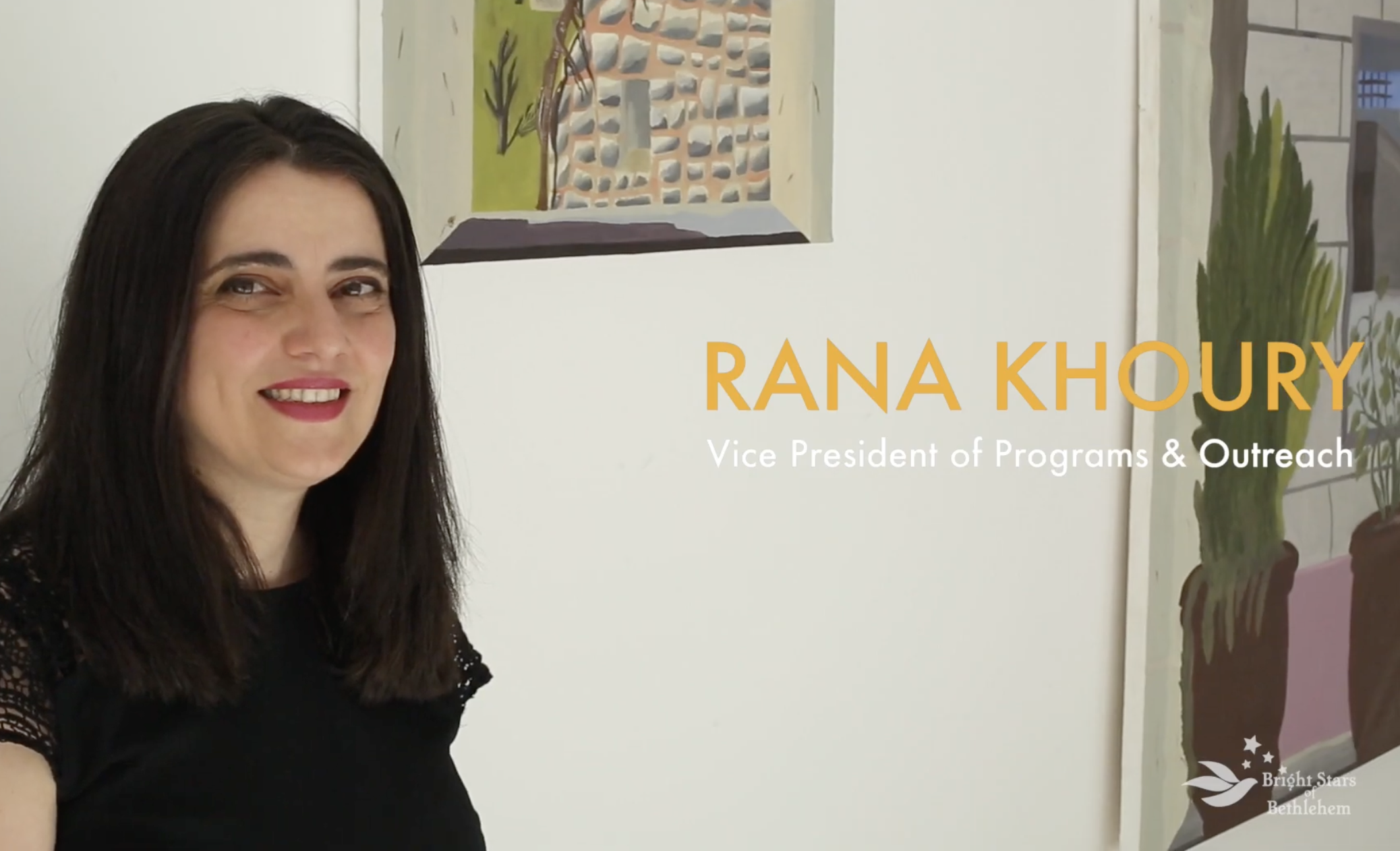
Rana Khoury has been part of Dar al-Kalima since its earliest days and has played a vital role in its growth and sustainability. As Vice President for Development, she has helped shape the university’s connection to both local and global communities.
With degrees from the University of Michigan in Modern Middle Eastern and North African Studies, Rana brings both academic depth and practical leadership to her work. She has founded and led initiatives such as the Authentic Tourism Program and the Civic Engagement Program, creating opportunities for students to engage meaningfully with their communities while strengthening cultural understanding. Her work reflects a belief that education should extend beyond the classroom and into real, lived impact.
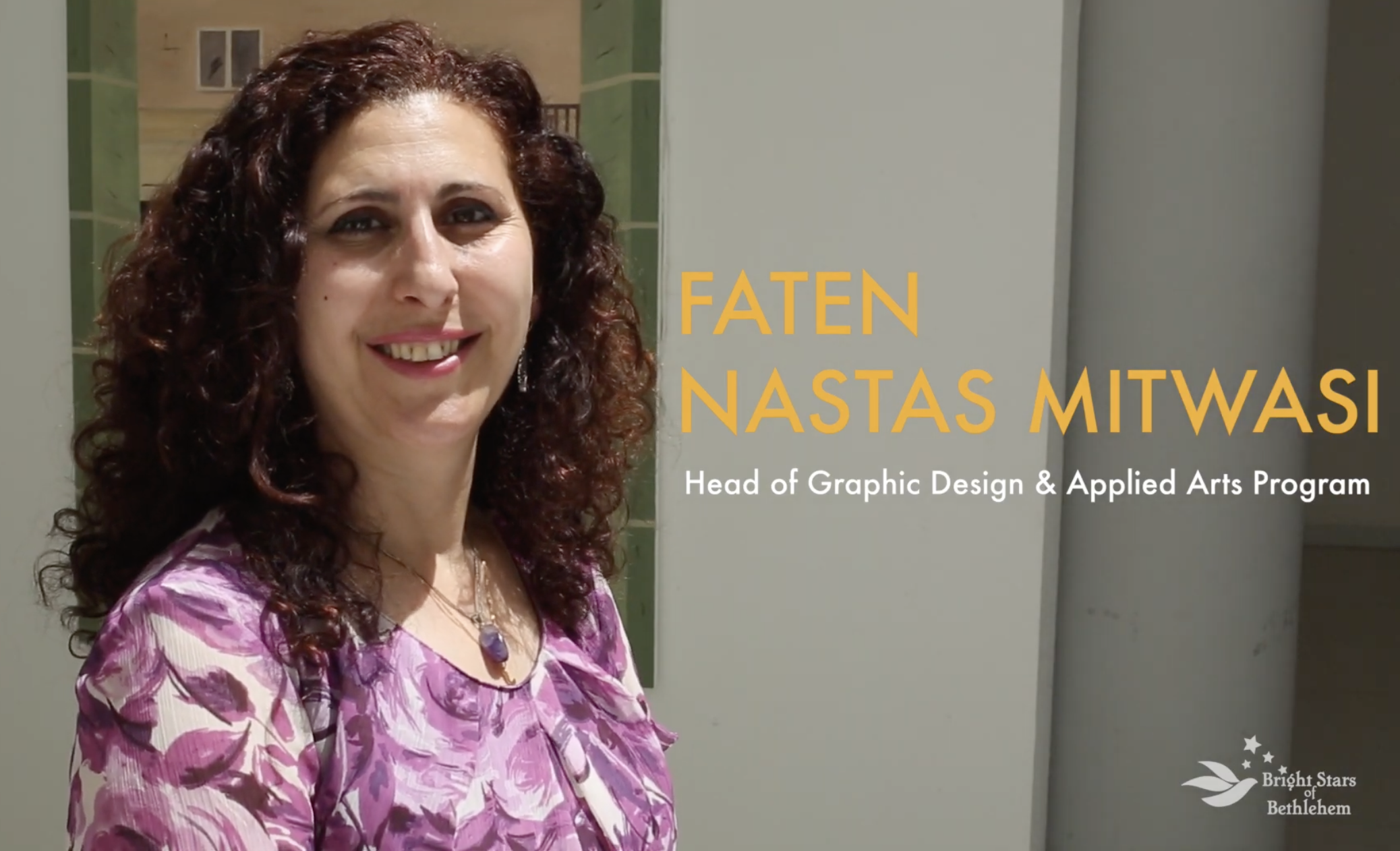
Faten Nastas Mitwasi’s journey began in Bethlehem, where she was born into a family deeply rooted in the arts. Inspired by her father, a renowned sculptor, she developed her creative voice at a young age.
Today, she is recognized as a leading figure in Palestinian art, known not only for her work as an artist but also as a curator, author, and educator. After earning her Master of Fine Arts from the Bezalel Academy in Jerusalem, Faten went on to help shape the artistic direction of Dar al-Kalima University, leading the Graphic Design and Applied Arts programs and mentoring countless students along the way.
Her work spans mediums including calligraphy, embroidery, ceramics, and installation art, often exploring themes of identity, home, and the emotional realities of life in Palestine. Her pieces have been exhibited internationally, yet her focus remains deeply local, rooted in preserving culture and telling stories that might otherwise be lost.
Through her teaching and projects like the “Creating Palestinian Symbols With Crochet” series, she continues to pass on both skill and heritage to the next generation. She is currently pursuing her PhD in Toronto, further expanding her impact as both an artist and scholar.
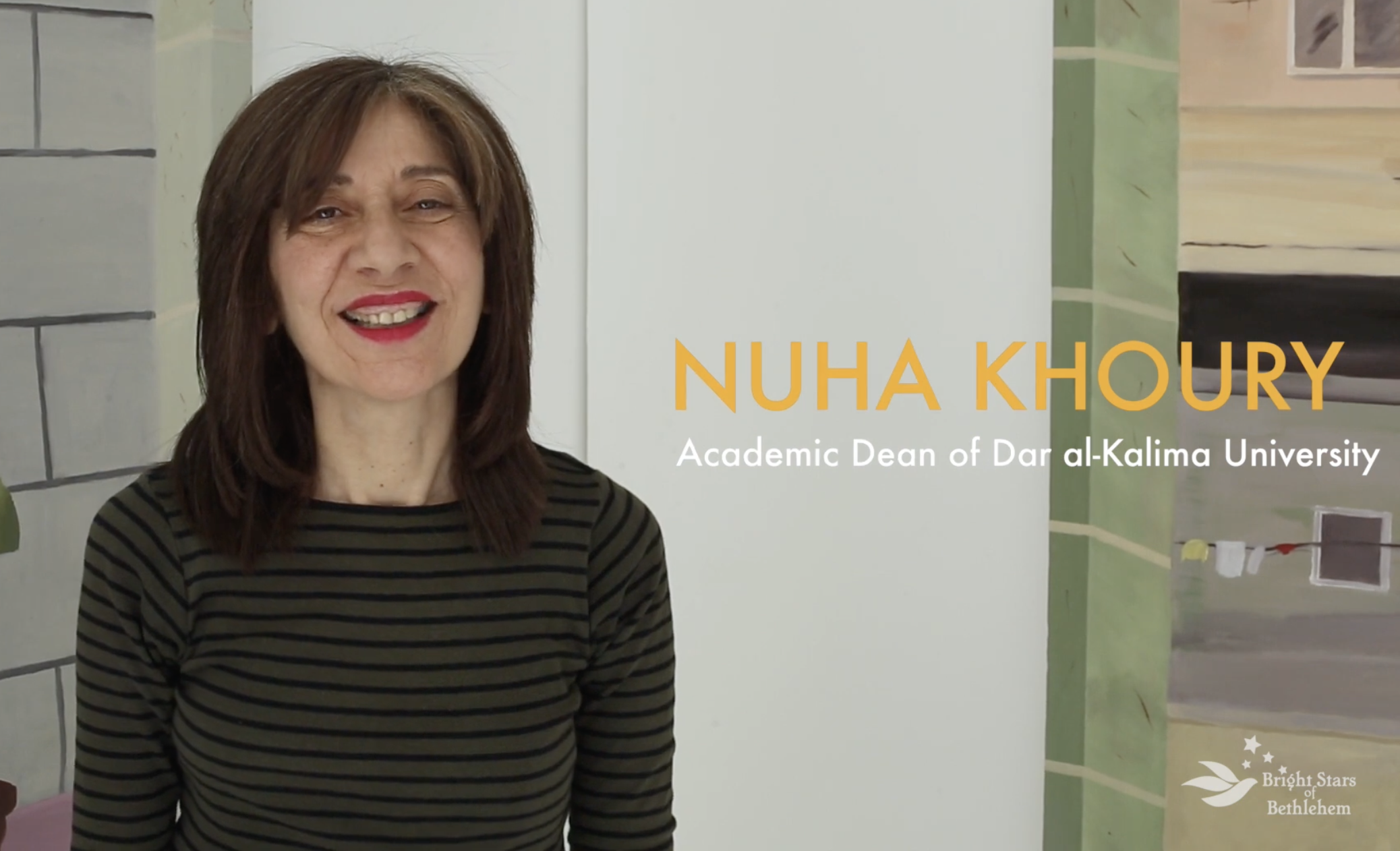
At the heart of Dar al-Kalima’s foundation is Dr. Nuha Khoury, a historian, educator, and founding dean whose life’s work has been dedicated to education and community building. Born in Jerusalem and now based in Bethlehem, she returned home after spending 15 years in the United States, where she earned her doctorate in Medieval Islamic History from the University of Michigan. Her leadership helped establish Dar al-Kalima as the first Christian college in the Middle East focused on arts, media, and culture, creating space for creativity, critical thinking, and free expression.
Her journey has also been marked by deep personal loss. In 2004, her father died after being denied passage to a hospital during a medical emergency. That experience, like so many others in the region, underscores the urgency behind her work. Yet even in the face of hardship, her vision remains grounded in hope and possibility.
“No peace can take place without laying the foundations for peace in each community,” she has said. “There is a need for innovative solutions that build a Palestinian identity that is creative, hopeful, and capable of shaping a future beyond its current reality.”
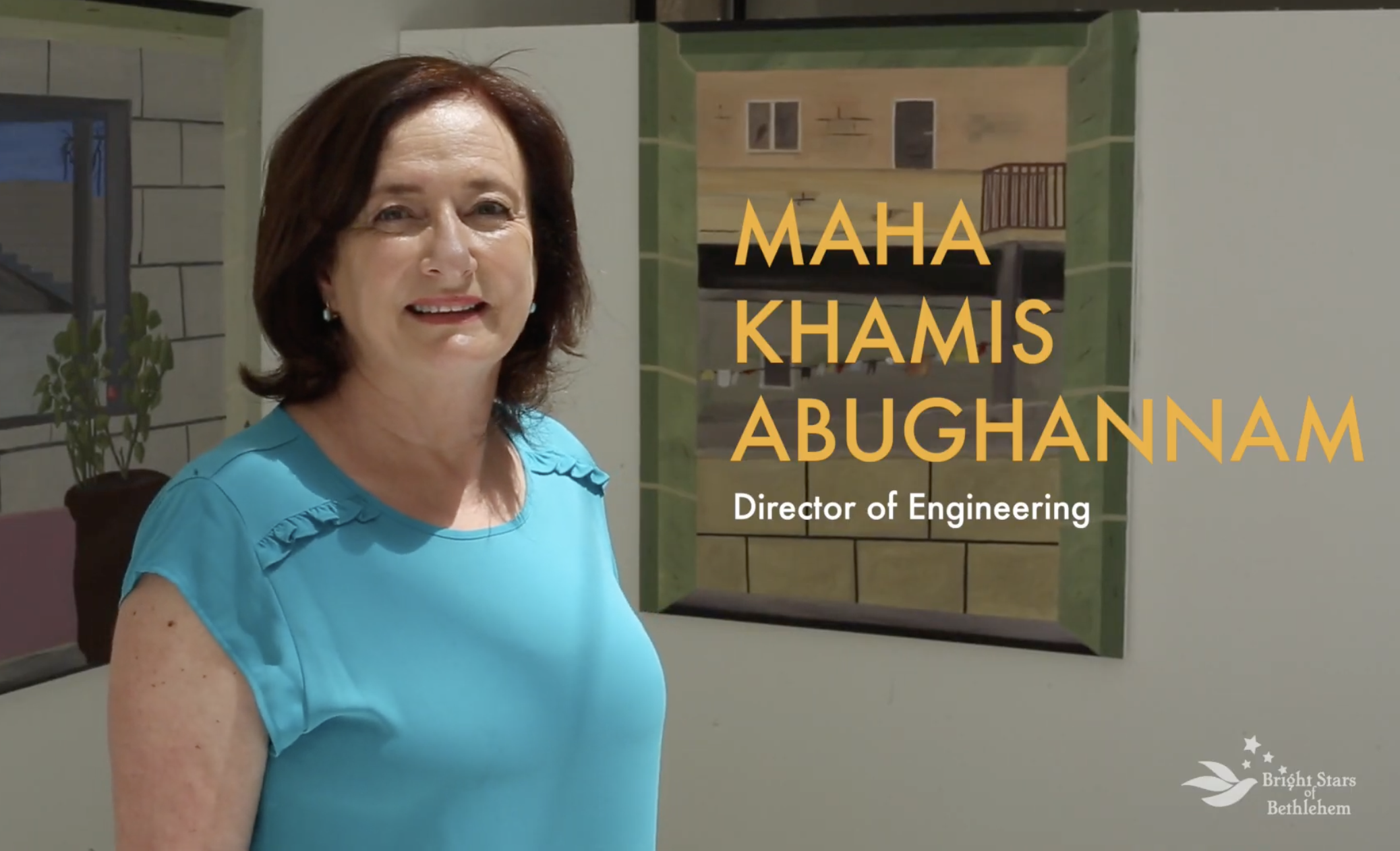
Together, these women have created more than programs or degrees. They have created pathways. Pathways for young women to lead, to express, to build, and to imagine a future that is different from the present.
Through the Women of Vision Scholarship, that work continues. Each student supported is a continuation of their belief that education is not only a right, but a powerful force for dignity, resilience, and hope.
