

Women's History Month: Jihad Jarboua
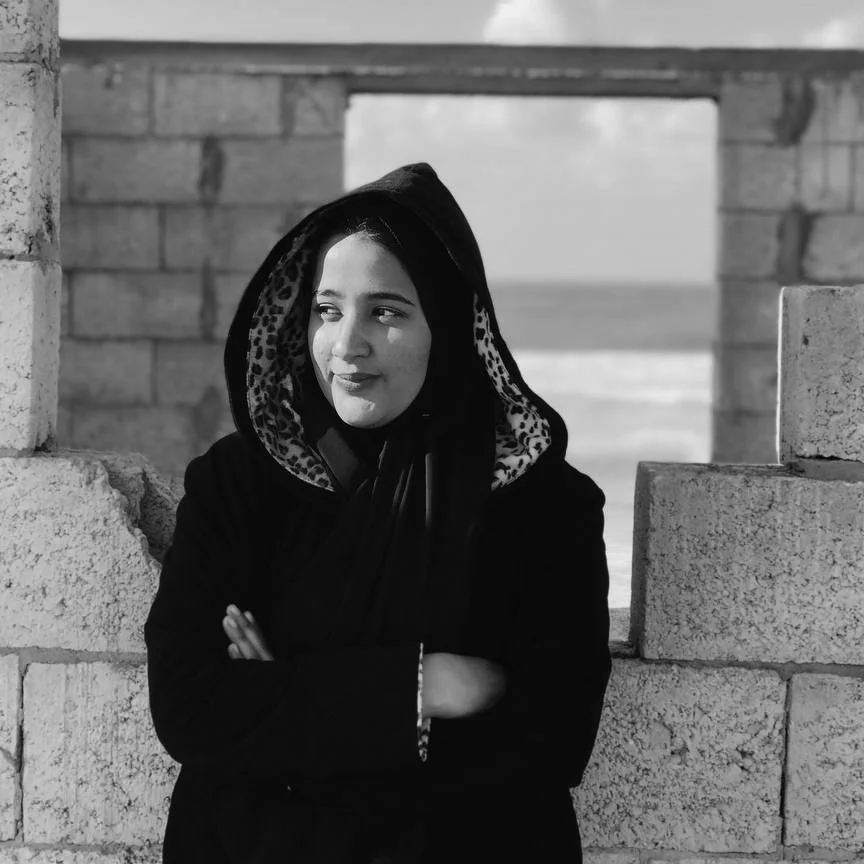
“My name is Jihad Jarboua. I am an artist from the Gaza Strip, and I am 26 years old.”
For Jihad, life in Gaza is no longer what it once was. “Right now in Gaza, we are living a life that is not really a life,” she says. “Our priorities have completely changed.” Mornings no longer begin with birdsong, but with the constant sound of drones overhead. Daily life is shaped by survival—standing in long lines for water that is often unsafe, navigating the uncertainty of food, and carrying the invisible weight of fear. “The chaos we live in has caused real mental fragmentation for us.”
And yet, in the middle of that chaos, Jihad creates. “Art, for me, is an experiment in my daily life. It allows me to mute everything around me and just hold a piece of paper and a pen. In that moment, I forget that there is actually a war.” As one of the artists featured in Lilies of Gaza: Women Artists in Times of War, her work becomes both an escape and a record—something that holds memory, even as everything around her is being erased.
At the center of Jihad’s story is the meaning of home. “When we left our home after my father and my brother were martyred, and after we were pulled out from under the rubble, I left while my eyes were fixed on the house,” she recalls. “To me, the house is family and memories.” That home, like so much else, is now gone. When her family returned after the first ceasefire, they found only destruction. “It was burned, with nothing left—only ashes. Truly, the ashes feel like our blood.” She remembers walking through the wreckage, covered in ash and wounds, crying out, “Why did this happen to us? Where is my father? Where is my brother?”
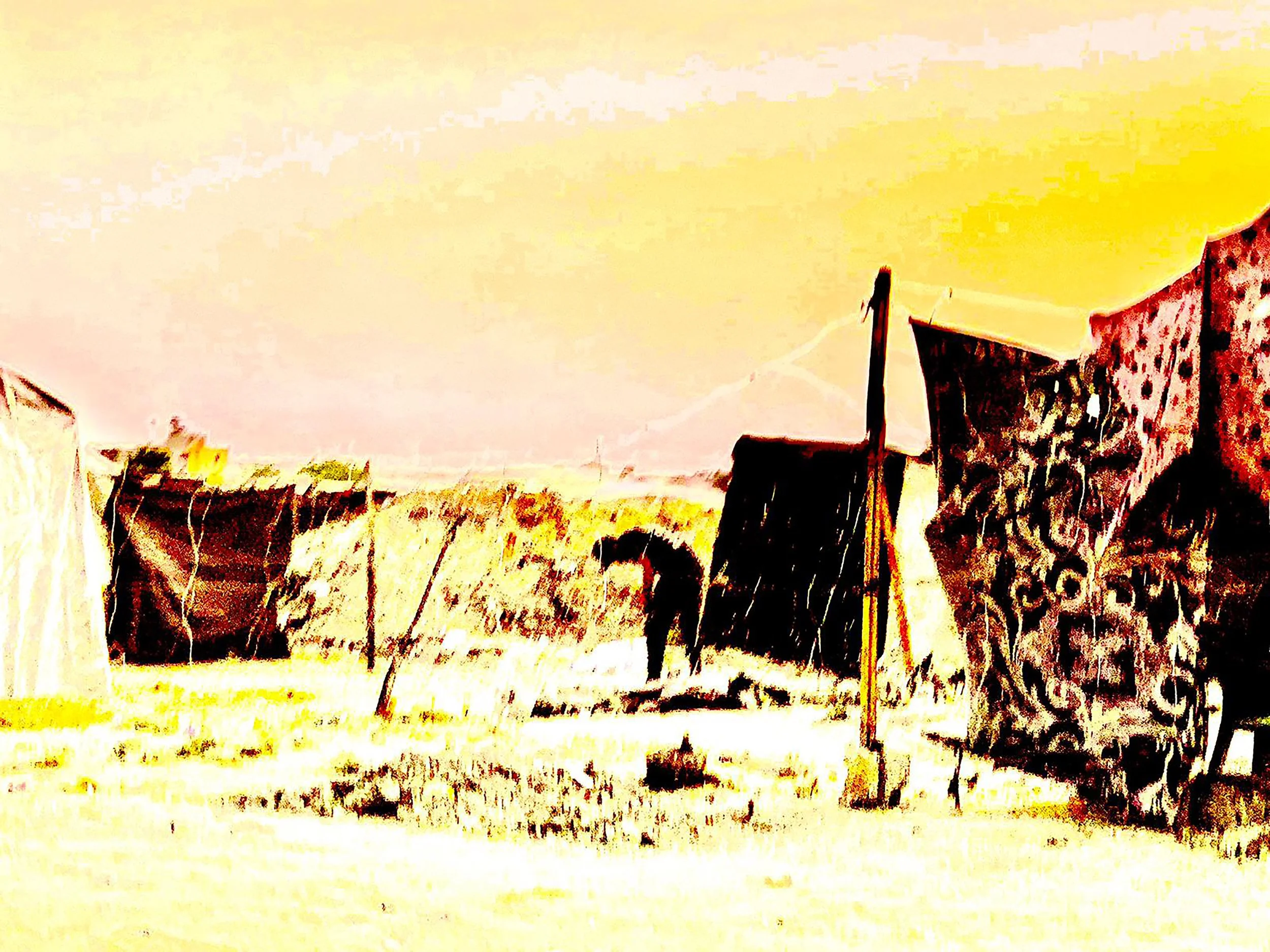
This loss lives on in her work.
“The concept of home clearly appears in my artwork,” she explains. “My work expresses the loss of home, the loss of people.” The war, she says, has distorted memory itself. “It made us like someone who loses their memory and then slowly starts to regain it. What used to be here? Where did it disappear?” These questions echo through her art, searching for what once was.
After losing both her family members and her home, Jihad also lost something deeply personal—her entire body of work. “My entire artistic archive disappeared in a single moment, as if I never existed.” Without tools, without materials, and even without her past creations, she was forced to begin again. “I realized that language is part of art,” she says. “I can express myself through writing, just as I do through drawing.” Through writing, she found a new way to create, capturing daily emotions, memories, and the reality around her.
Her words began to travel, even when she could not. “My words were able to travel the world,” she says. “But in reality, I am still under threat, surrounded by destruction, surrounded by death at any moment.” The contrast is stark—her voice reaching beyond borders, while she remains confined within them.
Even the idea of the future has changed. “The word ‘future’ has become very difficult for us,” Jihad shares. “We live only in the exact present moment. Tomorrow, for us, is destroyed.” Like many artists, she once dreamed of traveling, of sharing her work freely, of building a life surrounded by family and safety. “How easy the word freedom sounds,” she reflects, “yet how incredibly difficult it is for a person from Gaza.”
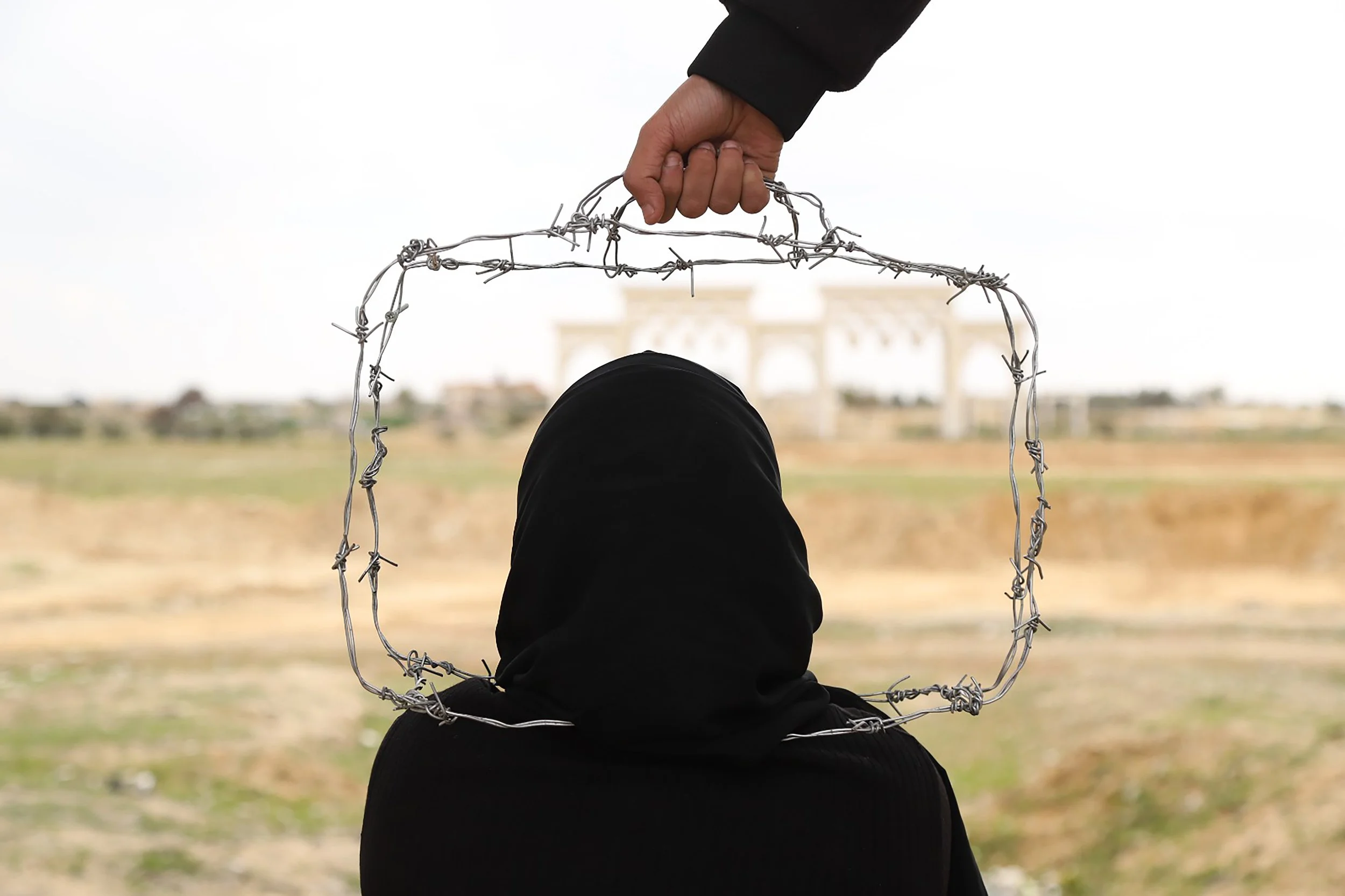
Still, in the face of everything she has lost, Jihad continues to create—not only for herself, but for others.
In the displacement camps, she began organizing small art activities for children. “There were no safe spaces for them,” she says. “So I focused on art as a way to escape my own despair.” With almost no resources, they improvised. “We invented tools ourselves—from cans or boxes, we reshaped and reused them.” In those small, fragile moments, something meaningful returned. “When I heard a child say, ‘I’m done,’ I felt that I had returned to being a child again.”
In a place where childhood has been interrupted, these moments carry weight. “Children here have lost their basic right to be children,” she says. “These activities returned a part of that to them.” Through art, Jihad is not only processing her own grief—she is helping others hold onto pieces of themselves, too.
“Art truly helps me escape many things,” she says. “Without art, people might not have known what I lived through.” It is both survival and testimony. “Art helped me face at least a small part of the war.”
This Women’s History Month, we honor Jihad Jarboua—an artist, a storyteller, and one of the voices of Lilies of Gaza. In a reality shaped by loss, she continues to create, to teach, and to speak.
And through her voice, the world is invited not just to see, but to remember.
