

Women's History Month: Nancy Taweel Salsa
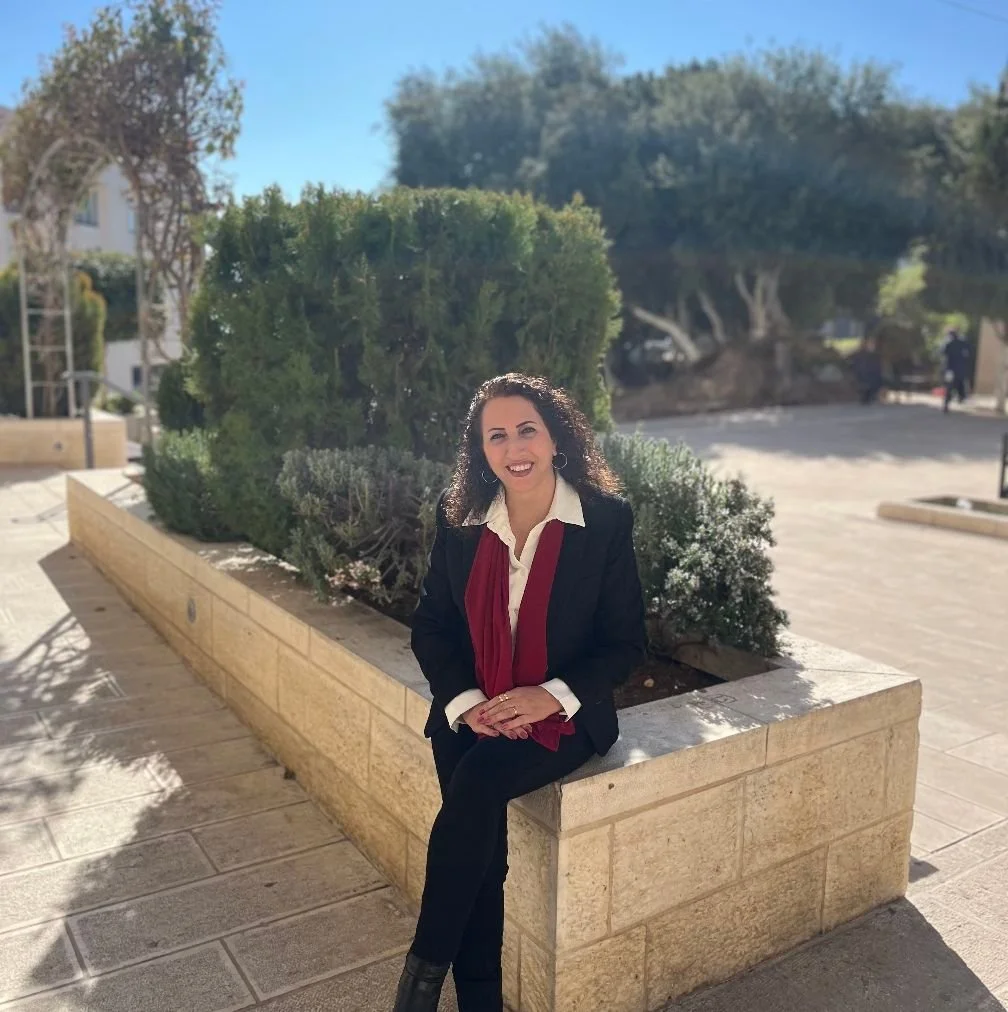
Some people find their life’s work.
Others are shaped by it—over time, through challenge, persistence, and an unwavering pull toward what they were always meant to do.
For Nancy Taweel Salsa, art was never just a career path. It was part of who she was from the very beginning.
Growing up in Beit Sahour, Nancy discovered her love for painting and visual art early in life—an artistic spirit she inherited from her father, whose work in architecture became a lasting source of inspiration. He didn’t just influence her creativity—he helped shape her identity as an artist.
But her path was not linear.
After high school, due to the political realities of the time, Nancy was unable to pursue formal studies in art. Instead, she began studying chemistry at Bethlehem University. While she committed herself to her studies, it quickly became clear that her passion lived elsewhere.
Even during that time, she found ways to stay connected to her creativity.
Throughout the first Intifada, Nancy volunteered with local institutions, led art programs in summer camps, and created murals for dabkeh dance groups, by turning stages into visual storytelling spaces. Her work began to gain recognition throughout Beit Sahour, where her name became associated with emerging artistic talent.
Eventually, she was able to follow that calling more directly, by studying interior design at the Middle University College in Jordan.
When she returned home, Nancy built a decade-long career in design, forming a creative partnership with her husband, a skilled carpenter. Together, they brought spaces to life through thoughtfully crafted interior décor and blending artistry with functionality.
But Nancy’s work didn’t stop there.
Her career expanded across multiple creative and educational spaces. She worked as an illustrator for children’s stories with the Tamer Institute for Community Education, and as a designer for children’s television programs and cartoons with Al-Quds Educational TV. She also spent more than a decade teaching art in local schools, while serving as a lecturer at Dar al-Kalima University, where she taught design and product development.
Her artistic expression also reached beyond the classroom and into powerful conceptual work.
One of her most notable installation pieces, “My Golden Dreams,” was exhibited in New York City. The piece featured 199 keys placed on a pillow with each key representing a personal dream and capturing both the fragility and persistence of hope.
Nancy is a multidisciplinary artist, skilled in a wide range of handicraft techniques, including mosaic glass, jewelry, paper recycling, and more. Over the years, she continued to develop her craft through programs at Dar Annadwa, where she also contributed professionally for many years.
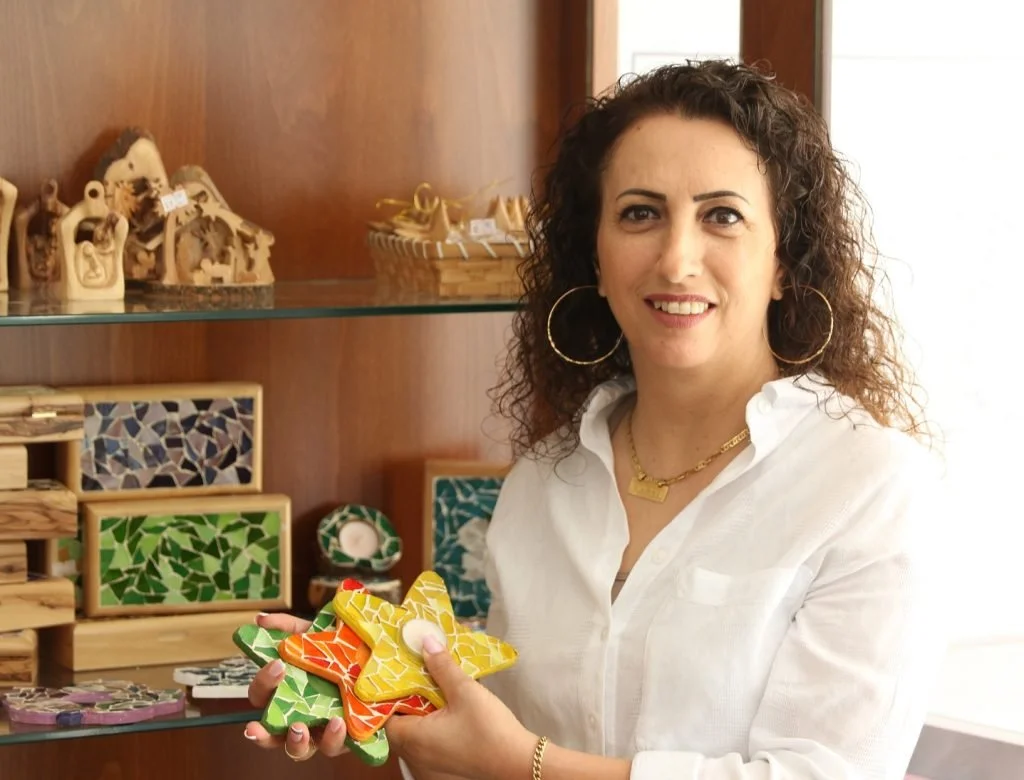
She eventually founded her own business, Deco Art, specializing in mosaic glass designs—particularly her well-known mosaic mirrors, recognized for their intricate detail and vibrant character.
Today, Nancy’s work has evolved into something even greater.
At Dar al-Kalima University, she leads efforts connected to the “Handicrafts Development in Palestine” initiative and serves as the manager of the Paltisana Program and Gift Shop (an artisan incubator established in 2020) to support and empower Palestinian creatives.
Through Paltisana, nearly 110 artisans—many of them graduates of Dar al-Kalima—are supported across a wide range of crafts, including ceramics, embroidery, woodwork, glass, soap making, and more.
But Paltisana is not just a program.
It is a community.
It provides a space for artisans to gather, collaborate, and share ideas. It offers access to training, professional mentorship, and fully equipped workshops and studios. And it supports artisans through every stage of their work—from design to production to packaging and marketing by helping transform creativity into sustainable income.
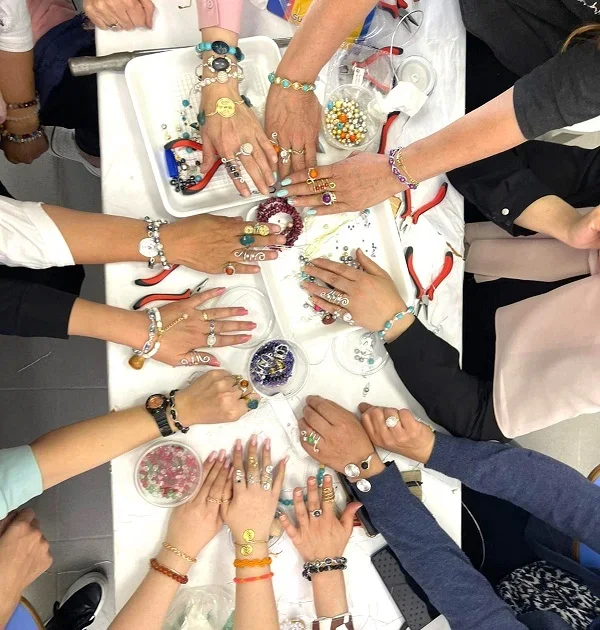
Environmental responsibility is also central to the program, encouraging artisans to reuse materials and innovate through recycling—turning what might be discarded into something meaningful.
Through Nancy’s leadership, this work becomes deeply personal.
Because she understands the journey.
She has lived it—from a young artist searching for opportunity, to a creator, educator, and now a leader helping others find their path.
This Women’s History Month, we honor Nancy Taweel Salsa not only for her talent, but for her commitment to lifting others—preserving culture, empowering artisans, and ensuring that creativity continues to thrive, even in the face of challenge.
Because when one artist is supported, an entire story is preserved.
And through Nancy’s work, those stories continue to be told.
