Where creativity meets clarity, and vision meets action.
Partnering with faith communities is a vital part of Bright Stars mission as we seek to empower Hope in Palestine. We believe that faith communities are a crucial pillar in advancing peace and ensuring that justice and life of abundance are a reality in the Holy Land.
Faith Giving
Your financial support allows Bright Stars of Bethlehem and Dar al-Kalima University to empower the next generation of creative leaders in Palestine. Your faith community can provide financial support through various ways:
-
-
Invite us to submit a formal proposal and let us know what information we can provide at admin@brightstarsbethlehem.org
-
Consider dedicating one Sunday offering during the year to support the work of Bright Stars and Hope in Palestine.
-
Hold a special event at your community- such as a chili cookoff, a bike tournament, art exhibit or film screening- as a way to experience joy and inspire generosity while supporting the vision and mission of Bright Stars.
-
Achieving gender equality and empowering Palestinian women in all aspects of life are central to the philosophy and values of Dar al-Kalima University. Since its founding in 1995, the Women’s Studies Program has been the first of its kind, focusing on raising awareness of women’s rights and issues. The University continues to provide education and leadership opportunities, promote discussions on equity, ensure a safe learning environment, and encourage women to explore a variety of careers in the arts, empowering them to overcome societal barriers. Donate to the fund here.
Invite a Speaker and Host Educational Events:
Invite Bright Stars to join your faith community to speak, preach, teach an educational session, or lead a confirmation class with your community. Fill out a request for a speaker form here, or call 815-315-0682 (Ext. 5).
Host a book study through our educational program to learn, reflect, and engage with voices from Palestine.
Host a film screening for a film from one of Dar al-Kalima Students. Email tala@brightstarsbethlehem.org to browse selection and request a student film.
Host the Lilies of Gaza Exhibition. Email tala@brightstarsbethlehem.org
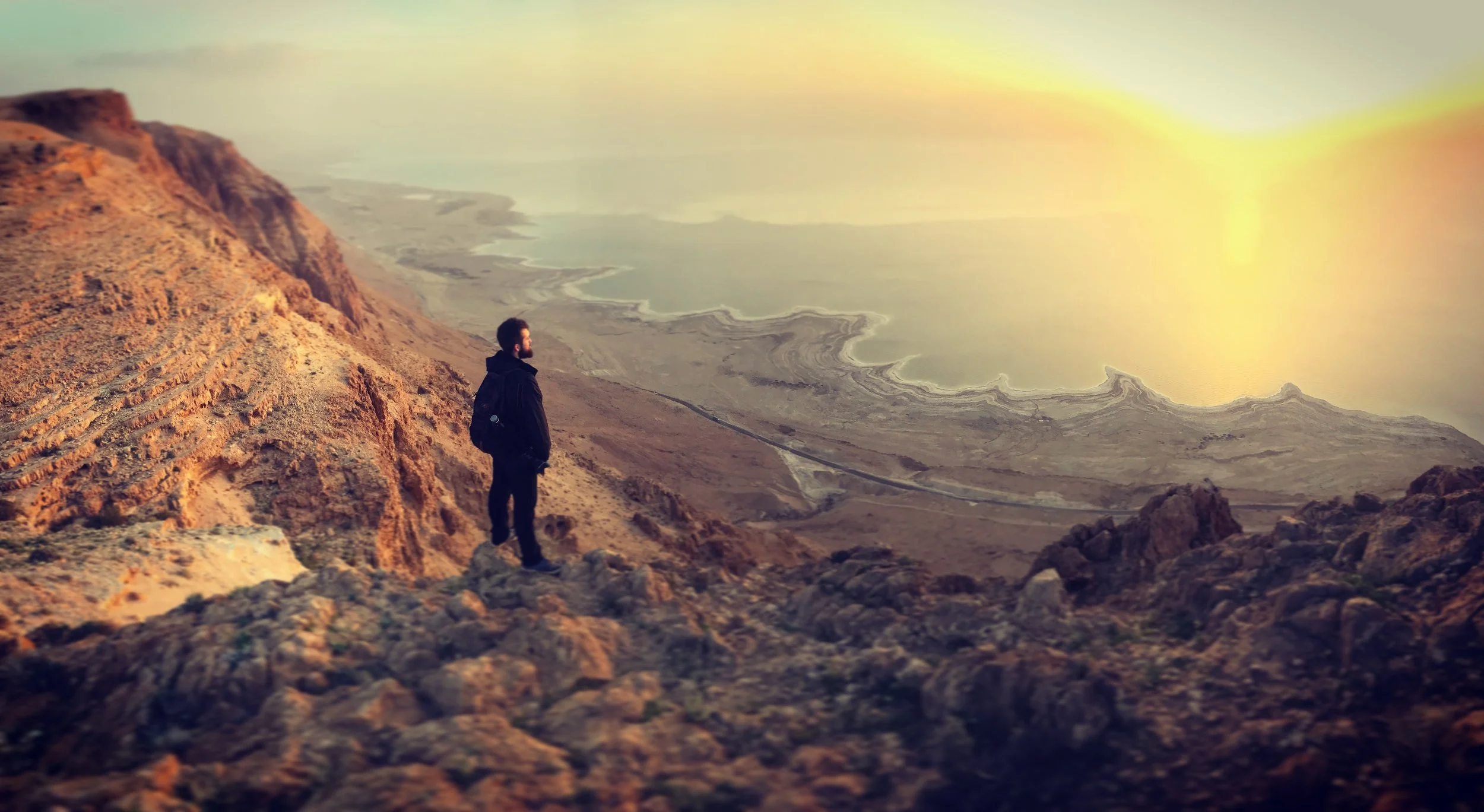
Experience Authentic Travel
One of the best ways to experience the work of Bright Stars is to travel to Palestine and the Holy Land. Millions of people visit the Holy Land each year, many for religious pilgrimages, but often these visitors explore ancient sites and historical monuments without experiencing deep engagement with the people whose land they are visiting. Rather than simply sending tourists to see these “dead stones” and sites of the Holy Land, we want to encourage authentic, life-changing travel.
Host a Film Screening from a Dar al-Kalima University Student
-
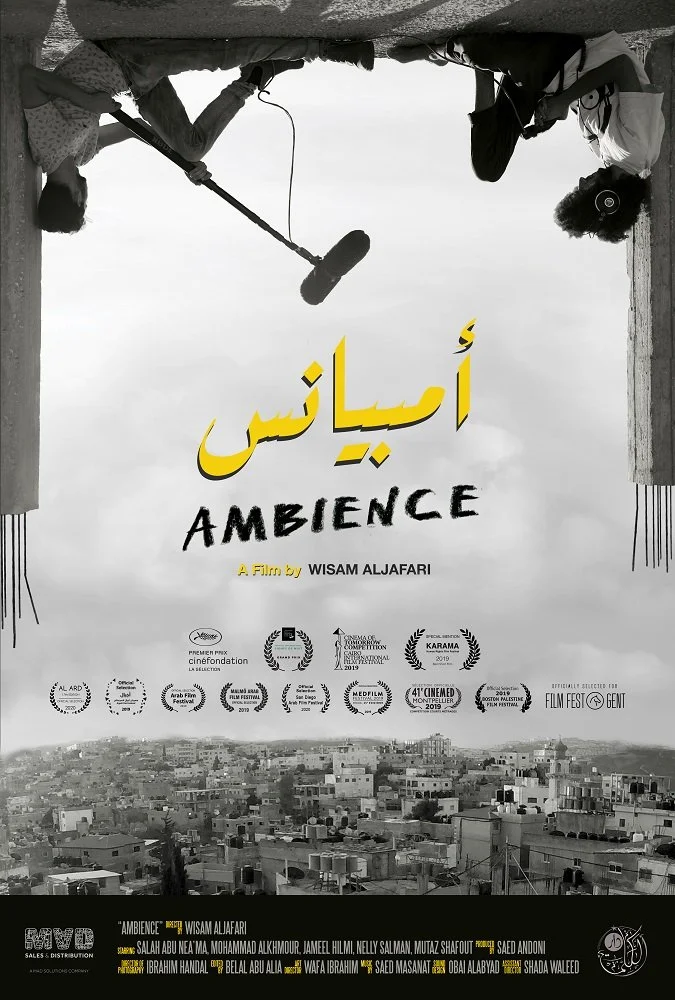
![Black and white poster for the film 'Ambience' directed by Wisam Aljafari. The poster features two individuals on opposite edges holding a boom microphone between them, with a cityscape of low-rise buildings at the bottom. The title is in Arabic and English, with laurels from various film festivals shown below.]()
AMBIENCE
Two young Palestinians try to record a demo for a music competition inside a noisy, crowded refugee camp. While failing to record because of the chaos of their surroundings, they discover a creative way to allow them to meet the deadline.
-
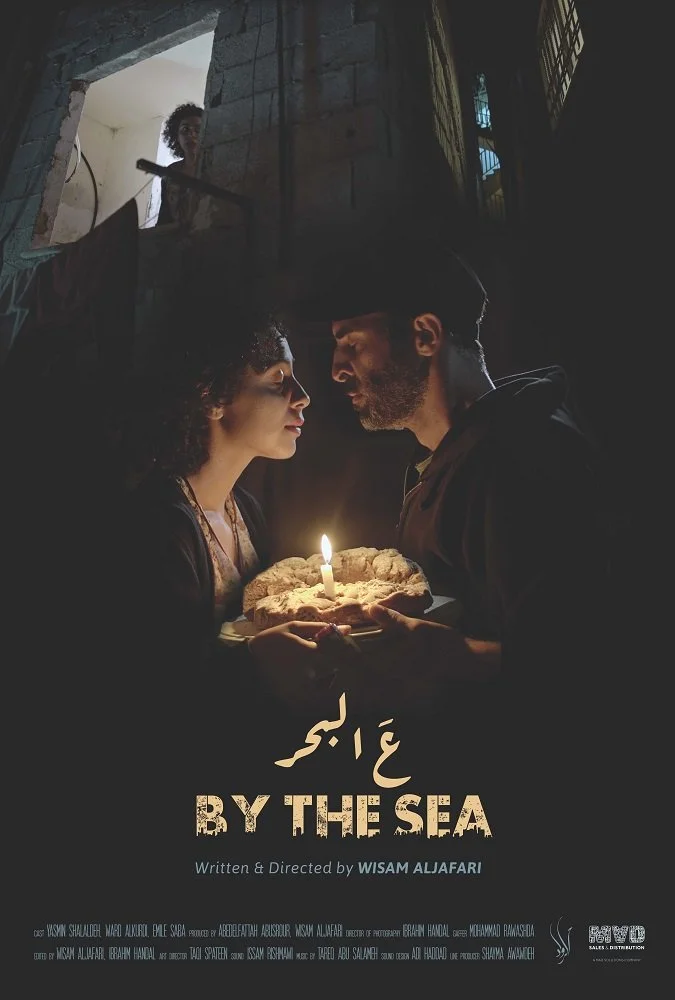
![A poster for a film titled "By the Sea" showing a man and woman holding a birthday cake with a lit candle, facing each other in a dark setting. There is a person peeking out from a window above.]()
BY THE SEA
Nahid wants to celebrate her husband’s birthday while he is on the run from Israeli soldiers, however, due to the COVID-19 lockdown, it is really difficult for Nahid to get all the ingredients needed to bake the birthday cake. Will Nahid be able to celebrate her husband’s birthday with him in their secret hideout?
-
![Poster for a short film titled 'In The Waiting Room' by Moatasem Taha. The poster features two people, Jalal Masarwe and Marlene Bajali, sitting and looking at each other. The text includes credits for producers, director of photography, editor, sound designer, mix, and music composer.]()
IN THE WAITING ROOM
Hussien — a 30-year-old Palestinian Arab with Israeli citizenship after being evacuated in 1948 — escorts his freshly bereaved 70-year-old mother Rashida to her medical appointment in an Israeli hospital waiting area. While Hussien works on an assignment on his laptop, Rashida — who hasn’t left her house in three months — tries to socialize with others in her limited Hebrew.
-
![A movie poster for 'Mar Mama' featuring a stylized illustration of a person with a spear riding a horse, positioned in front of a backlit window, with text listing the filmmakers and production details.]()
MAR MAMA
Haunted by her mother’s death and recurring attacks by Israeli forces on her city, a young girl becomes obsessed with death. To distract her, her father makes a stop-motion film. However, his attempts fail and the girl finds nothing other than imagination to escape from reality.
-
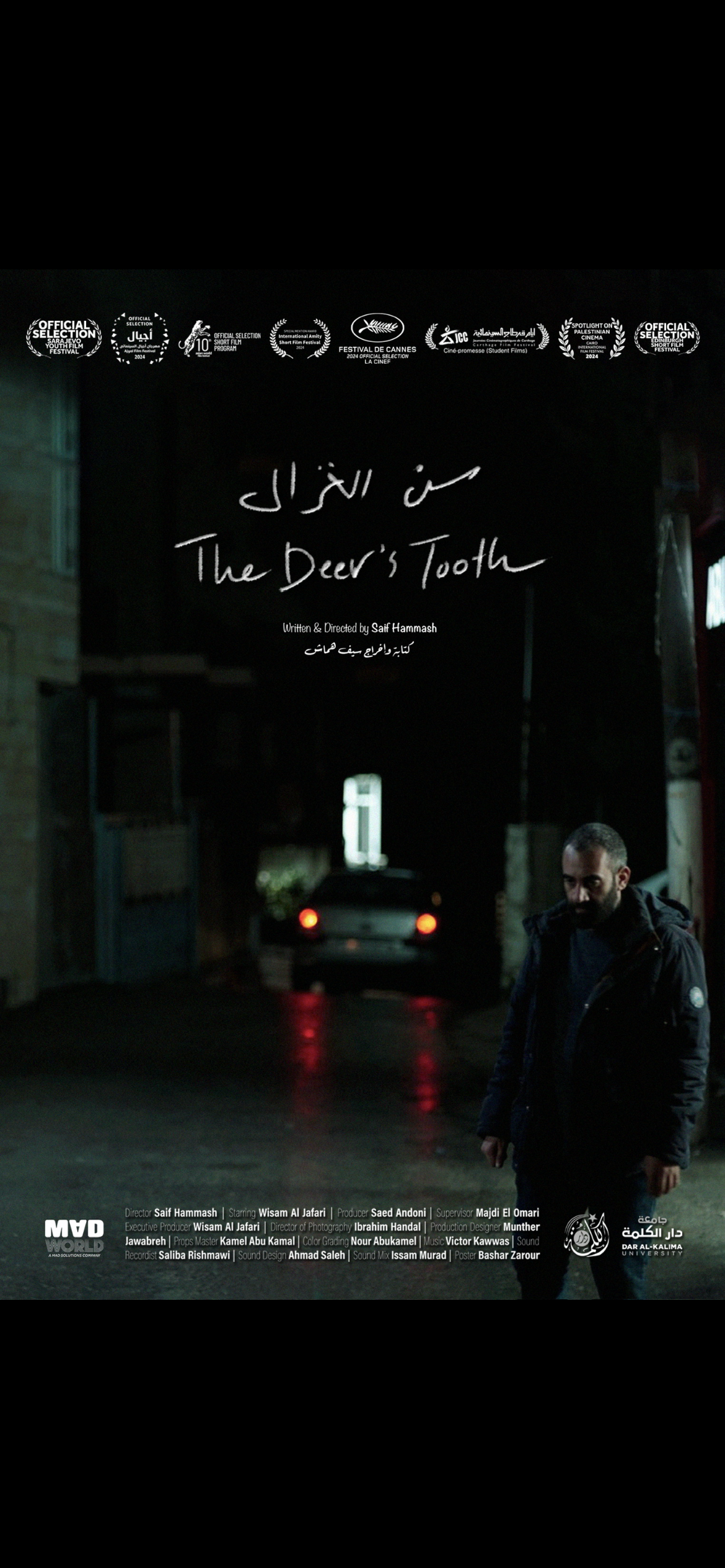
![Movie poster for 'The Deer's Tooth' directed by Saif Hammash, featuring a man walking at night on a wet street with a car in the background and numerous film festival awards at the top.]()
THE DEER'S TOOTH
The film centers around a young man from a refugee camp who embarks on a perilous journey in order to fulfill his little brother’s wish: To throw his milk tooth into the sea.
-
![Poster of a short film titled 'The First Dinner' by Thekra Makalda, showing a woman and an older man sitting at a dining table with a curtain in the background.]()
THE FIRST DINNER
Siwar and her father are sat on the dinner table face to face. An encounter after 15 years of absence. Could what once was, still be? A somehow non existent relationship between a father and his little girl is redefined at the dinner table.