

Women's History Month: Azza Ahmed

For Palestinian artist Azza Ahmed, art is not simply expression — it is survival.
During the war in Gaza, daily life became a constant struggle to secure the most basic necessities. Tasks that once took minutes now consume entire days.
“Of course, during the war, a day is never normal — it’s nothing like a day before the war,” Azza explains. “As a housewife, I have to wash clothes by hand, cut firewood, light a fire to cook food or bake bread. All of these tasks take many times longer compared to normal circumstances.”
Water must be gathered and rationed. Food must be prepared under difficult conditions. Families displaced from their homes often live together in overcrowded spaces, sharing what little they have.
“Most of the day is spent just securing basic necessities,” she says.
Yet even in the middle of this hardship, Azza continues to create.
“Sometimes, I would steal a little bit of time from all this — a very small portion — just to draw. Sometimes I could draw for fifteen minutes, sometimes for an hour.”
Art materials are scarce. While displaced in Khan Younis, she searched for supplies from street vendors whenever she could find them. Still, she persisted.
“Honestly, art saved me. It pulled me out of this deadly, dark world.”
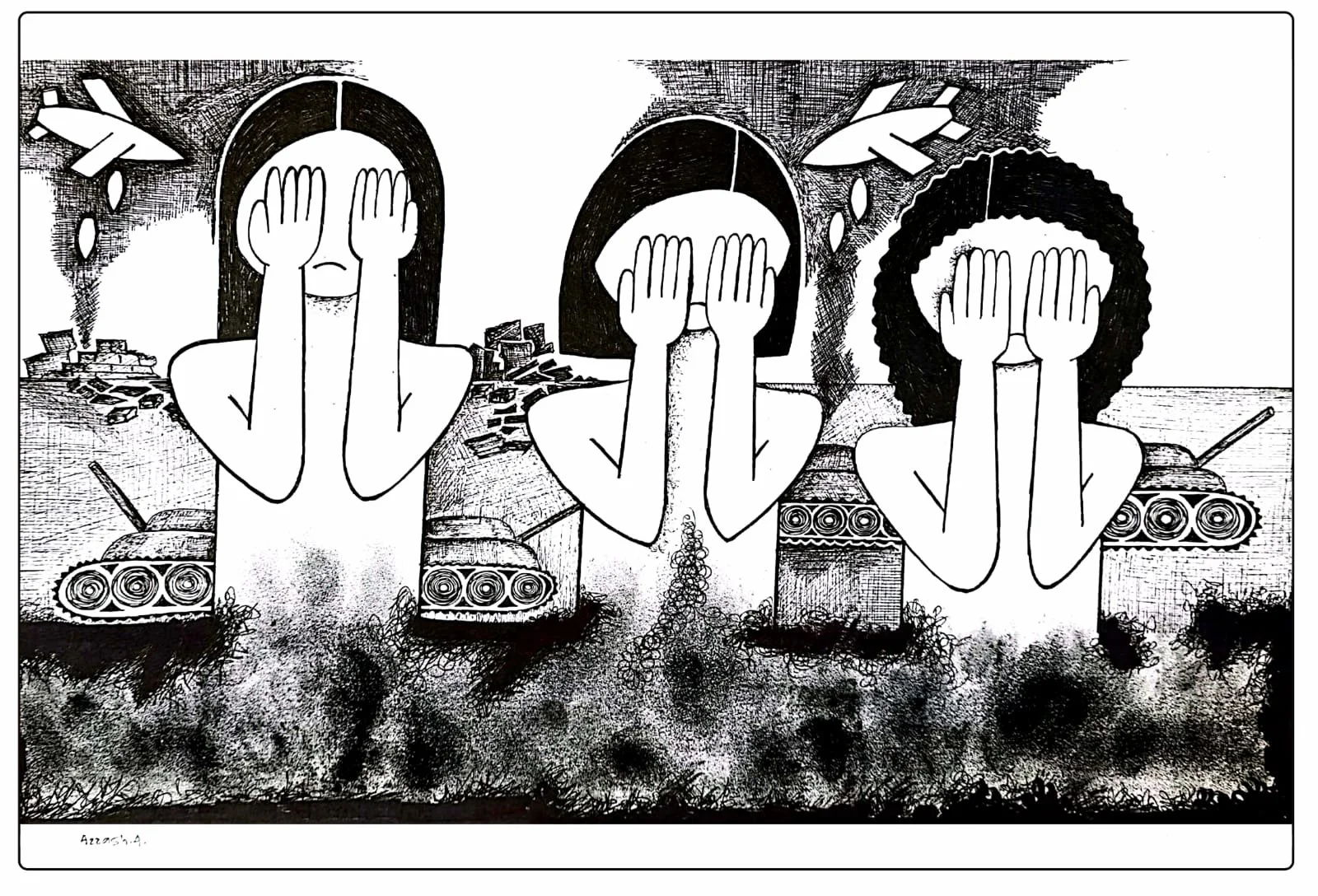
Azza’s journey through the war has been marked by constant displacement. Homes were shelled, neighborhoods became battle zones, and families were forced to flee again and again.
She was displaced eleven times.
From Khan Younis to overcrowded UNRWA schools, to Rafah where five families shared a single classroom, to tents battered by heat, cold, sand, and fear — each place brought new uncertainty.
“It was pure terror. I don’t know how to describe it with any word other than terror.”
Even so, she never stopped drawing.
“During all of this, I continued to draw — even in the school, even in the tent.”
Eventually, Azza made the long journey back to Gaza on foot. “The walk was extremely painful — my feet hurt terribly. But out of sheer joy, I didn’t want to stop.”
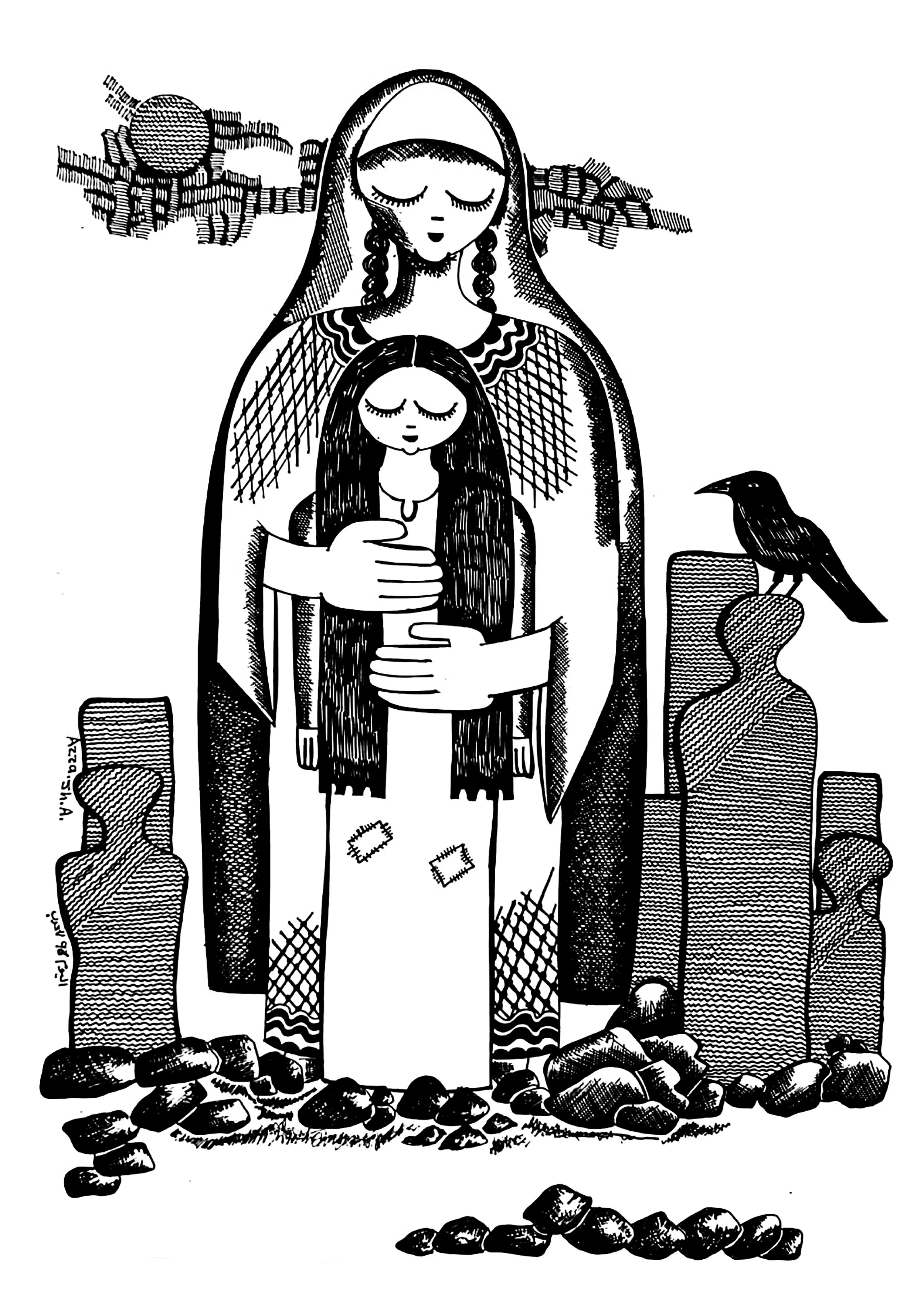
Today, like so many others, she lives in a home deeply damaged by war. Walls are broken. Windows and doors have been replaced with tarps and plastic sheets. Entire families now live together after their homes were destroyed.
Winter brings another challenge.
“My hands hurt, and sometimes I can’t even feel them because of the cold,” she says. “There is an enormous difference between living under tarps and plastic and living in a complete, proper home.”
And yet, Azza continues to create whenever she can.
Her art stands as a testament to resilience — and to the strength of women who continue to care for their families, preserve culture, and create beauty even in the darkest circumstances.
This Women’s History Month, we honor Azza Ahmed, and the countless women who refuse to let their voices, their creativity, or their hope be silenced.
