

Legacy Giving
The Importance of Planned Giving:
Weaving a Legacy into a Greater Tapestry
In the tapestry of life, each individual is like a single thread. On its own, it may seem modest, pulling together a small yet meaningful pattern within their own families and communities. Yet, when woven together with others, it becomes part of something far greater. This is the essence of planned giving. An intentional act made by individuals, single threads, to contribute to a legacy larger than themselves and to help create a brighter future for generations to come.
At Bright Stars of Bethlehem, we understand that the world is vast, full of interconnected stories, each with their own challenges and successes. Our mission is to raise hope and awareness for Dar al-Kalima University, the first and only university in all of Palestine for arts, culture, and design. This mission is a collective effort, a shared dream woven together by the generosity of individuals who see their own lives as part of a much larger, enduring story.
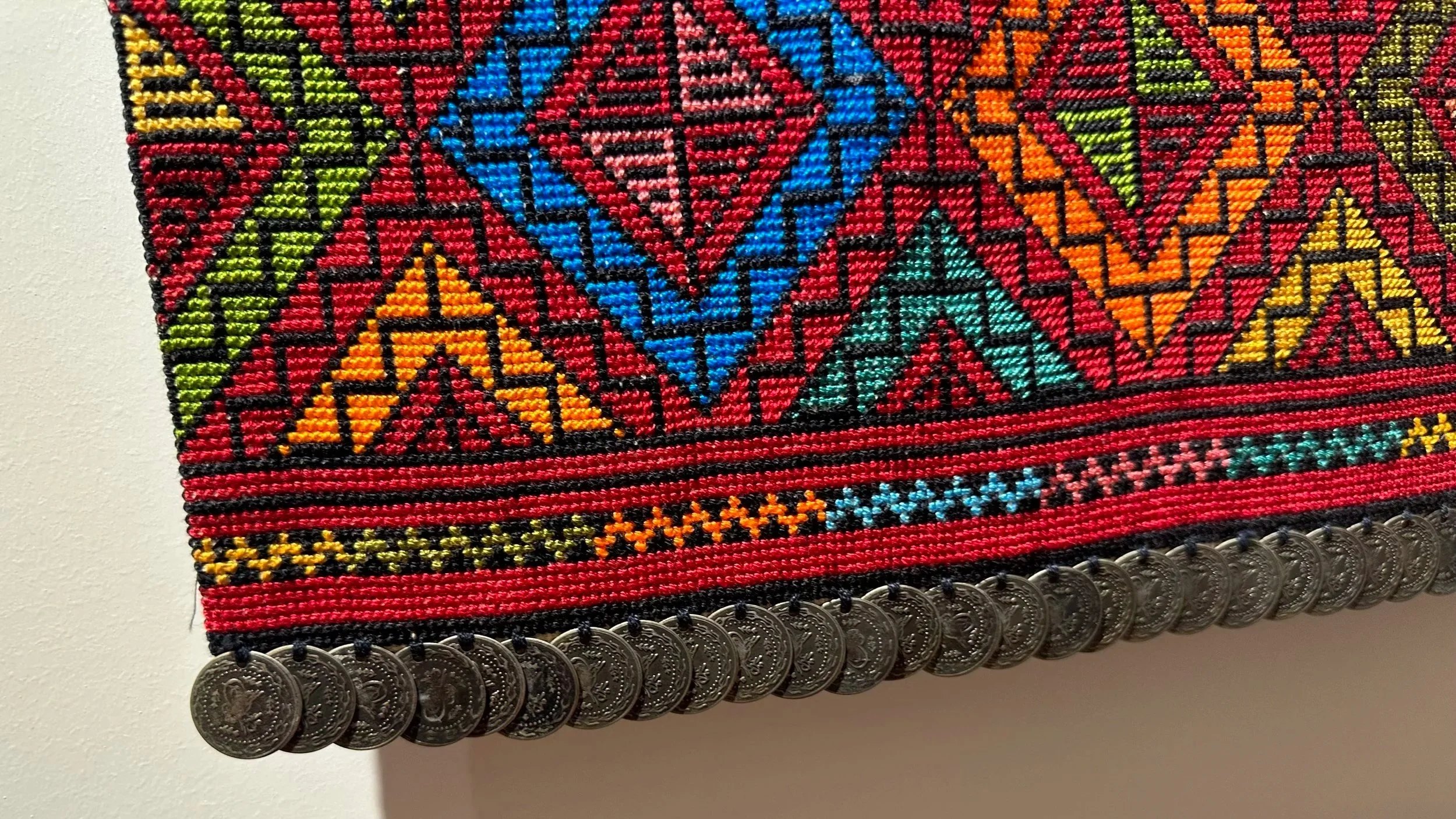
Through planned giving, you can become part of this greater narrative, helping us to continue our work and build a legacy of empowerment. Leaving a legacy is not just about financial contributions; it is about creating something lasting that reflects the cultural richness and resilience of Palestine. And there is no better symbol for this than Tatreez—the intricate embroidery that has been passed down through generations of Palestinians.
The Tapestry of Tatreez: A Cultural Legacy
-
![A man in a black clerical shirt and glasses and a woman in a black dress stand in front of a red and black textile wall hanging with square patterns decorated with floral designs and coins, possibly an altar or ceremonial art piece.]()
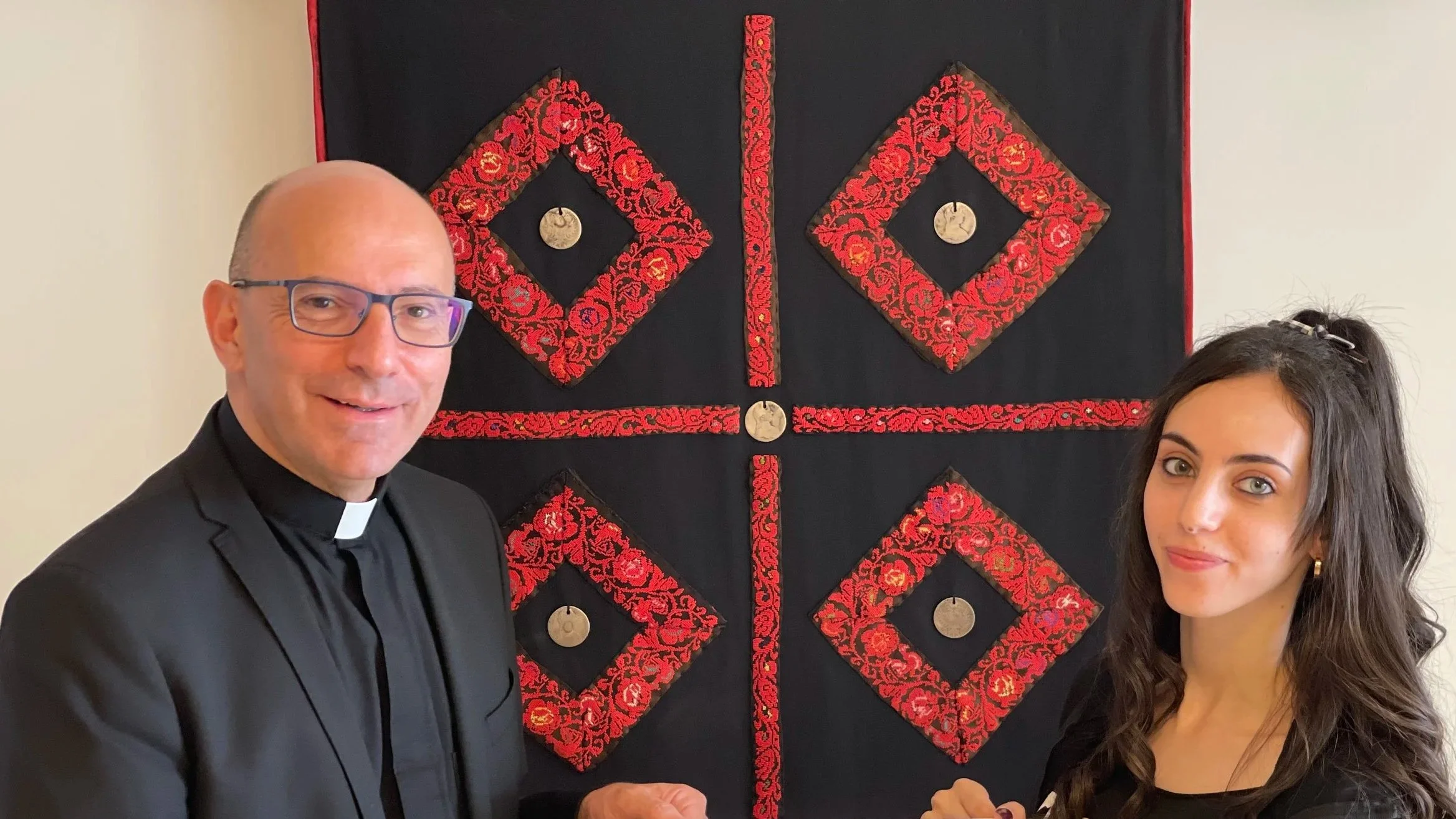
Tatreez, or Palestinian embroidery, is more than just a craft. It is a powerful symbol of identity, resilience, and heritage. Each stitch tells a story, and each pattern carries deep significance. Tatreez is a cultural language, a way of preserving history and expressing a collective memory, and it plays a vital role in the heritage of Palestinians from all regions, including Gaza and Bethlehem.
-
![Close-up of colorful embroidered textile with wooden carved figurines on top, on a wooden surface.]()
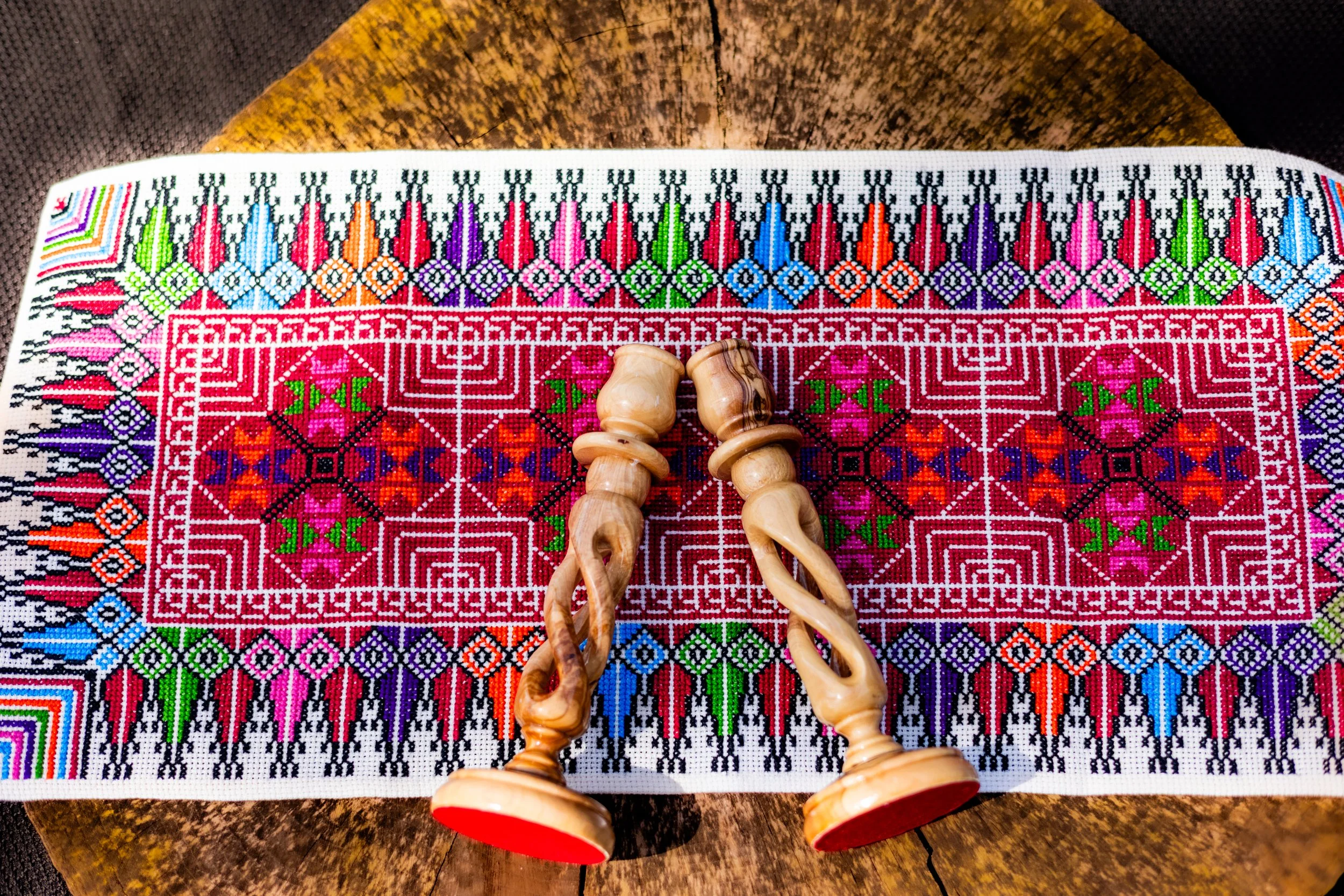
In Gaza, vibrant pinks, deep blues, reds, and light greens are common color palettes representing the sea, sky, native plants, and the land. Several patterns are commonly used- the Heart Branch, Coffee Bean, Candle Stick, Gaza Sea Wave, and the Gaza Flower motifs are just a few. Often these motifs are arranged in repeating patterns that symbolize unity, resilience, and steadfastness and are sewn onto dark indigo fabric.
-
![A woman with brown eyes and wearing a black hijab holds a black face mask with colorful floral embroidery, while another woman with light skin, brown eyes, wearing a beige hijab, and a red dress with white polka dots stands behind her.]()
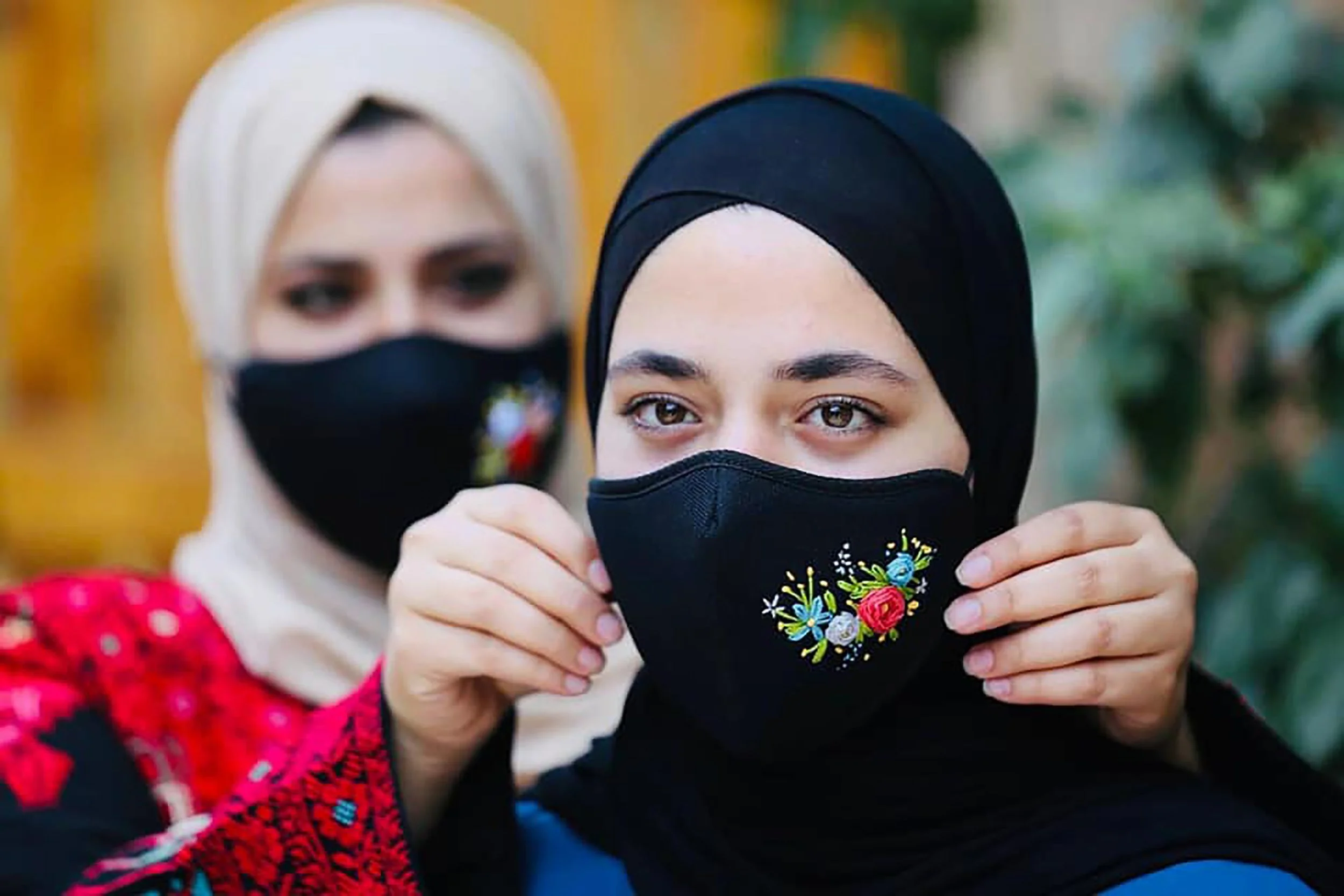
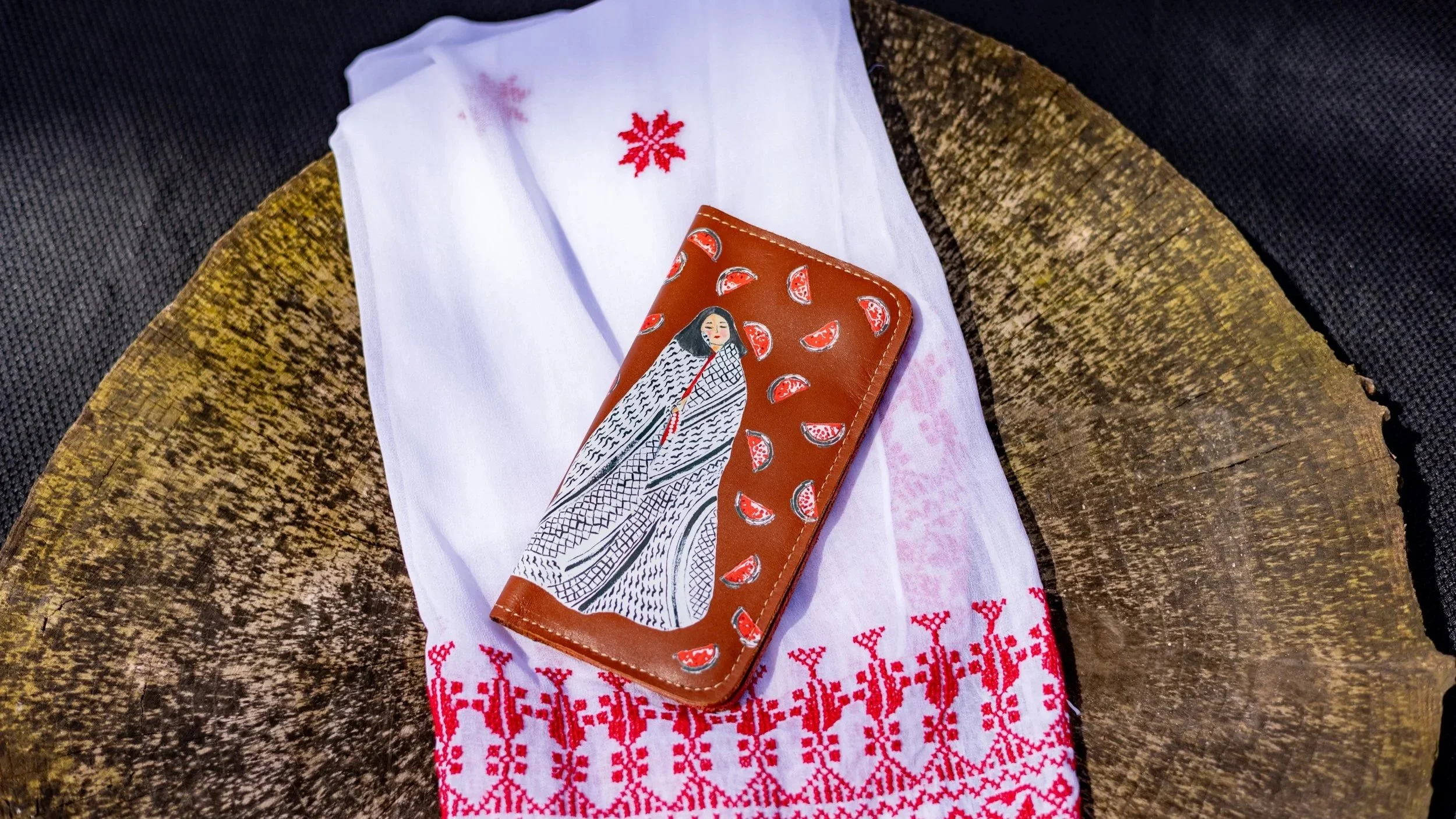
In Bethlehem, couching stitches, where gold, silver, or silk cords are laid on top of the fabric and sewn down in curving patterns, are more dominant, especially in Malak-style dresses. Well-known regional patterns include the Bethlehem Moon and Stars. The Star of Bethlehem is an eight-pointed geometric star design that signifies hope, much like our name.
-
![A white cloth with red embroidery, a brown wallet with a woman in traditional attire illustration and red-patterned embroidery, and a wooden surface underneath.]()
These distinctive patterns from Gaza and Bethlehem represent connections and the weaving of a rich cultural narrative that connects Palestinians to their roots and to one another. Tatreez, with its timeless designs, is a perfect metaphor for what we aim to achieve through planned giving: the creation of a lasting legacy that threads together generations, offering a sense of continuity and hope for the future.
Weaving Threads for Future Generations
Each gift, whether in the form of a bequest, a charitable annuity, or a legacy donation, is like a stitch in this cultural tapestry. It becomes an enduring symbol of your commitment to shaping a better world. At Bright Stars of Bethlehem, your legacy helps provide children with the tools to succeed: education, mentorship, resources, and hope for a brighter tomorrow. Your planned gift helps weave a brighter future by supporting educational programs that empower the next generation to preserve and share their heritage, just as tatreez has been passed down through generations.
By planning for a future beyond our lifetime, we ensure that the work we began will continue to grow, expand, and touch lives in ways we can only imagine. Your gift becomes foundational—just as the patterns of tatreez continue to be passed from one generation to the next, your legacy will be passed on, ensuring that future leaders of Palestinians have the opportunity to build a future of equality, stability, and peace.
Leaving a Legacy of Empowerment
There is profound power in knowing that you’ve helped someone’s life change for the better. But planned giving isn’t just about the lives changed—it’s also about you. It’s about the sense of peace and fulfillment that comes with knowing that your contributions will endure, long after you’re gone. Through your legacy, you will empower young men and women to pursue their dreams, support youth through art therapy, and enrich a community as it continues to adapt and thrive.
Your legacy will also be intertwined with the cultural resilience of Palestine. Just as the patterns of tatreez tell the story of generations before, your planned gift will tell the story of your commitment to a better future. Your generosity will contribute to the preservation and strengthening of the community's cultural identity, which, like tatreez, cannot be erased. The hope and promise that your gift brings will last far beyond your lifetime, inspiring new generations to carry forward the lessons of resilience, heritage, and community.
Becoming Part of Something Bigger
When you choose to make a planned gift, you are not just donating money—you are becoming a part of a larger, more enduring story. You are an active participant in the ongoing legacy of Bright Stars of Bethlehem. You are helping to create a world where education is the pathway to opportunity, where the light of hope shines even in the darkest places, and where cultural heritage is celebrated and preserved.
Much like the traditional regional patterns of tatreez, which are passed from one generation to the next, your gift will be part of something much bigger than yourself—a legacy of hope, resilience, and empowerment.
The story of Bright Stars of Bethlehem is still being written, and your role in it can be profound. Through planned giving, you can make a lasting difference, becoming part of something greater than yourself.
Now is the time to act. Become part of the tapestry that will inspire hope for generations. Let your legacy be one of empowerment, education, and transformation. Together, we are creating a future woven from hope and resilience.
Ready to get started? Contact Tracie Ortman, Executive Director, at 765-860-8675 or tracie@brightstarsbethlehem.org, or fill out the form below.
Bright Stars Legacy Giving Registration Form
We thank you for your planned gift to Bright Stars of Bethlehem and ask that you help us by completing this form.
Frequently Asked Questions
-
Planned giving is a way to make a charitable gift through your estate or financial plans, often allowing you to support a cause you care about while also meeting personal, family, and financial goals. Many planned gifts take effect in the future, such as through a will, trust, retirement account, or life insurance policy.
-
No. Many planned gifts come from donors of modest means that have been longtime supporters. In fact, some of the most impactful planned gifts are simple bequests in a will. Planned giving is more about intention than wealth.
There is no standard amount. Some donors choose a percentage of their estate (such as 5%–10%), while others designate a specific amount or asset. The best gift is one that aligns with your financial circumstances and charitable goals.
-
A bequest through a will or living trust is often the simplest option. You can designate a specific dollar amount, a percentage of your estate, or a residual amount after loved ones are provided for.
-
Absolutely. Most donors prioritize family first and then designate a charitable gift from their remaining assets. Planned giving allows you to balance both goals.
-
In most cases, yes. Bequests in wills and beneficiary designations can generally be updated if your circumstances or priorities change, but we always recommend you speak with your attorney and/or financial planner.
-
Common assets include:
Cash
Stocks and mutual funds
Retirement accounts (IRAs, 401(k)s)
Life insurance policies
Real estate
Business interests
Donor-advised fund assets
-
Many planned gifts do not affect your current income or lifestyle because they are made from assets transferred in the future. Some planned gift arrangements can even provide income during your lifetime.
-
Depending on the type of gift, donors may receive income tax deductions, reduce capital gains taxes, or lower estate taxes. Donors should consult their financial, tax, or legal advisors regarding their specific situation.
-
A charitable gift annuity is an agreement where a donor makes a gift to a nonprofit and, in return, receives fixed payments for life. After the donor's lifetime, the remaining funds support the organization's mission.
A charitable remainder trust provides income to the donor or beneficiaries for a period of time, with the remaining assets eventually going to charity. It can be a useful tool for donors with highly appreciated assets.
-
Yes. Retirement assets are often among the most tax-efficient assets to leave to charity because nonprofits generally do not pay income tax on those distributions.
-
Bright Stars of Bethlehem currently uses planned gifts in a combination of ways: scholarships, operational expenses, and funding the Bright Stars of Bethlehem Endowment, but we would love to discuss your passions and how to best steward your gift to match them while also meeting the needs of Dar al-Kalima University.
-
Many gift agreements include flexibility so they can be applied in a way that remains consistent with the donor's original intent while addressing the organization’s future needs.